Insulation Rebates in Mississauga
How the Home Renovation Savings programme is laid out, and which path attic, basement and air sealing work fall under.
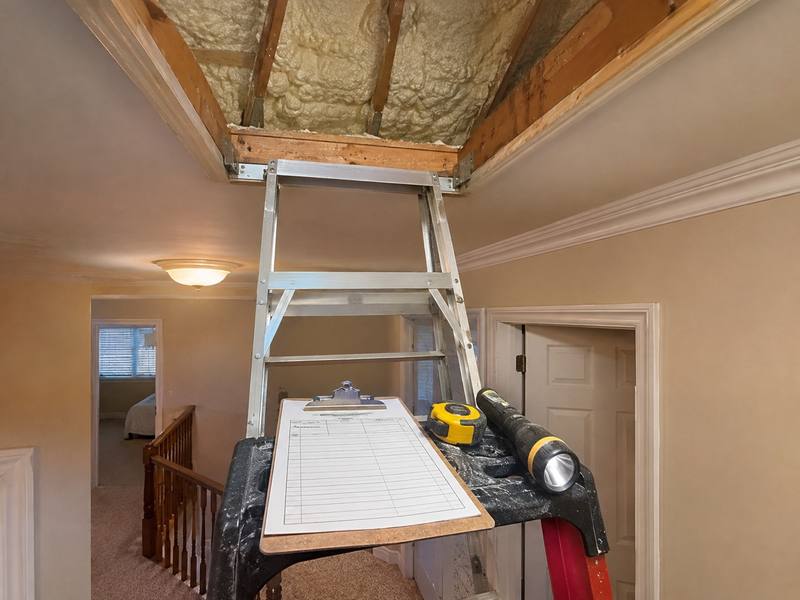
Insulation rebates in Mississauga run mainly through one programme, Home Renovation Savings, offered by Enbridge Gas and Save on Energy with support from the Ontario Government. If you want an energy rebate for insulation, this page sets out the programme's two paths and where attic, foundation and air sealing work fit in each. We explain the programme and we do the insulation. We do not do, book or arrange home energy assessments.
Two paths in the programme
Home Renovation Savings has two paths, and the difference between them is whether a home energy assessment happens before the work. One path skips the assessment and covers one or more upgrades. The other needs an assessment, asks for two or more upgrades, and lists more kinds of work.
Each rebate in each path comes with its own terms and conditions, set by the programme. Read the current list on the programme site before you plan around either path.
If the attic floor is the only job on your list, the path without an assessment is probably the simpler one. A newer subdivision house may already have fair depth up there, so we check it with a tape measure against the depth markers before saying a top-up is worth doing. Our attic top-ups page compares blowing fibreglass over the existing layer with pulling the old layer out first.
- Without an assessment: one or more upgrades, and attic insulation is on the list.
- With an assessment: two or more upgrades. The list covers attic, wall, foundation and exposed floor insulation, plus air sealing.
- Both paths: each rebate has its own terms and conditions. Confirm them on the programme site.
Where foam and basement work sit
Foundation insulation and air sealing are on the assessment path's list, not the attic-only path. Basement walls and rim joists may fall under foundation insulation, which sits in the assessment path as the list stands now. The programme's current terms decide whether a given job qualifies. We don't, so check before you book.
Whether a job earns a rebate and how to insulate it are two different questions. Here are the options for each spot, side by side.
Rim joist and sill plate
The rim joist can take closed-cell spray foam, foam board cut to fit and sealed at the edges, or batts pushed into the joist bays. Closed-cell foam fills each bay against the rim and sill plate and works as its own air and vapour barrier. Foam board does much the same with less mess, though every bay needs cutting. Batts on their own let air move behind them. For the rim joist we would pick closed-cell, because the bays are irregular and crowded with wires and pipes. The call is still yours.
Basement walls before they are finished
A bare concrete basement wall has three options: foam board against the concrete with studs in front, closed-cell foam sprayed on before the studs go up, or batts in a stud wall with a vapour barrier. Board and foam keep moisture away from the framing. Batts need a careful vapour barrier, and if the wall is already framed they give up less headroom. The trade-off here is floor space against what touches the concrete. Our basement insulation page goes through each method. If the wall is already finished, the drywall has to come down first.
Pot lights, plumbing stacks and the attic hatch
Warm air leaves through the ceiling at these gaps, and each one takes sealant, foam or a fitted cover depending on the spot. Foam goes around a plumbing stack, the hatch gets a gasket and rigid board on its back, and a pot light needs a cover made for that fixture. Our air sealing page covers each one.
The home energy assessment, step by step
A home energy assessment is a visit from an energy advisor working with the programme, done before the upgrades. Some people call it a home energy audit. We include it here as general information only. It is not our service, and we do not do, book or arrange it.
Before the work
The advisor visits and records the condition of the house: the attic, the walls, the foundation and how much air leaks out. The programme measures the upgrades against that record.
The upgrades
The insulation and air sealing come after the assessment. The programme's terms set which upgrades count and how many the path needs.
After the work
If the programme requires it, the house is checked again once the upgrades are done. The programme site explains how to book both visits and what happens at each.
What we give you for the paperwork
You get a written quote before the job and an invoice after it. Both put each area of the house on its own line: the rim joist, a basement wall, the attic floor, the hatch. Each line names the material and what is installed in that spot, for example closed-cell spray foam in the joist bays or blown fibreglass over the existing attic layer.
Every job follows the same steps, the ones on our home page: inspect, measure, explain the options, give a written quote, install, clean up. A rebate adds one step, and it's on your side. The programme site lists what you need to submit, so set that list beside our quote before work starts. If a line is missing something the programme wants, tell us and we will spell out what was actually installed there.
Before you sign anything
Work through this list with the programme site open. It takes the guesswork out of the paperwork, and the decision about the work stays with you.
- Read the current terms and conditions on the programme site the day you plan the work. Don't go by an older article or what a neighbour told you.
- Check that the upgrade you want is on the list for your path.
- Check whether that upgrade needs a home energy assessment first. If it does, the assessment comes before anyone starts work.
- Keep the written quote, the invoice and any programme forms together.
- Ask us what each line on the quote covers: the area, the material and what goes in. If a line is vague, we rewrite it.
FAQ
Common questions about insulation rebates
Spray foam may be covered if it is used for an upgrade the programme lists. The programme's current terms decide, not the material. Home Renovation Savings lists insulation by area (attic, wall, foundation, exposed floor) rather than by product. Closed-cell foam on a rim joist or basement wall may fall under foundation insulation, which sits in the path that needs a home energy assessment; the programme's current terms decide. Check the current terms before you book.
It depends on the upgrade. Attic insulation is listed in the path with no assessment. Wall, foundation and exposed floor insulation and air sealing are listed in the path that needs one, and that path also asks for two or more upgrades. The programme's current terms decide which path your job falls under. We can explain the paths, but we do not do, book or arrange the assessment.
Attic insulation is listed in the Home Renovation Savings path that needs no home energy assessment. Whether it is available right now depends on the programme's current terms. Enbridge Gas offers the programme with Save on Energy, so confirm it on the programme site before you book attic work.
No. A rebate is a reason to check the house, not a reason to insulate it. A newer subdivision home in Mississauga may already have reasonable depth on the attic floor and a rim joist in fair shape. We measure what's there and tell you plainly when a job isn't needed.
No, we do not do, book or arrange home energy assessments. The programme site explains how to book one with an energy advisor working with the Home Renovation Savings Program. Once you have the advisor's results, we can quote the insulation and air sealing work they point to.
Our written quote lists each area of the house, the material for it and what we plan to install there. The invoice after the job uses the same layout and lists what actually went in, area by area. The programme site says what you need to submit, so check that list against our quote before work starts.

Get a quote
Get an insulation quote in Mississauga
Call (437) 563-1419 or send the form, and tell us what you notice in the house: a cold floor over the garage, a draft at the baseboard, a damp smell in the basement. We measure the spots that matter and give you a written quote with the options side by side.