Platinum Insulation Contractors of Mississauga: Spray Foam Insulation in Mississauga, ON
Our foam goes on rim joists, garage ceilings under bonus rooms and basement walls that aren't finished yet.
- Serving Mississauga & 13 neighbourhoods
- Open 24 hours
The work
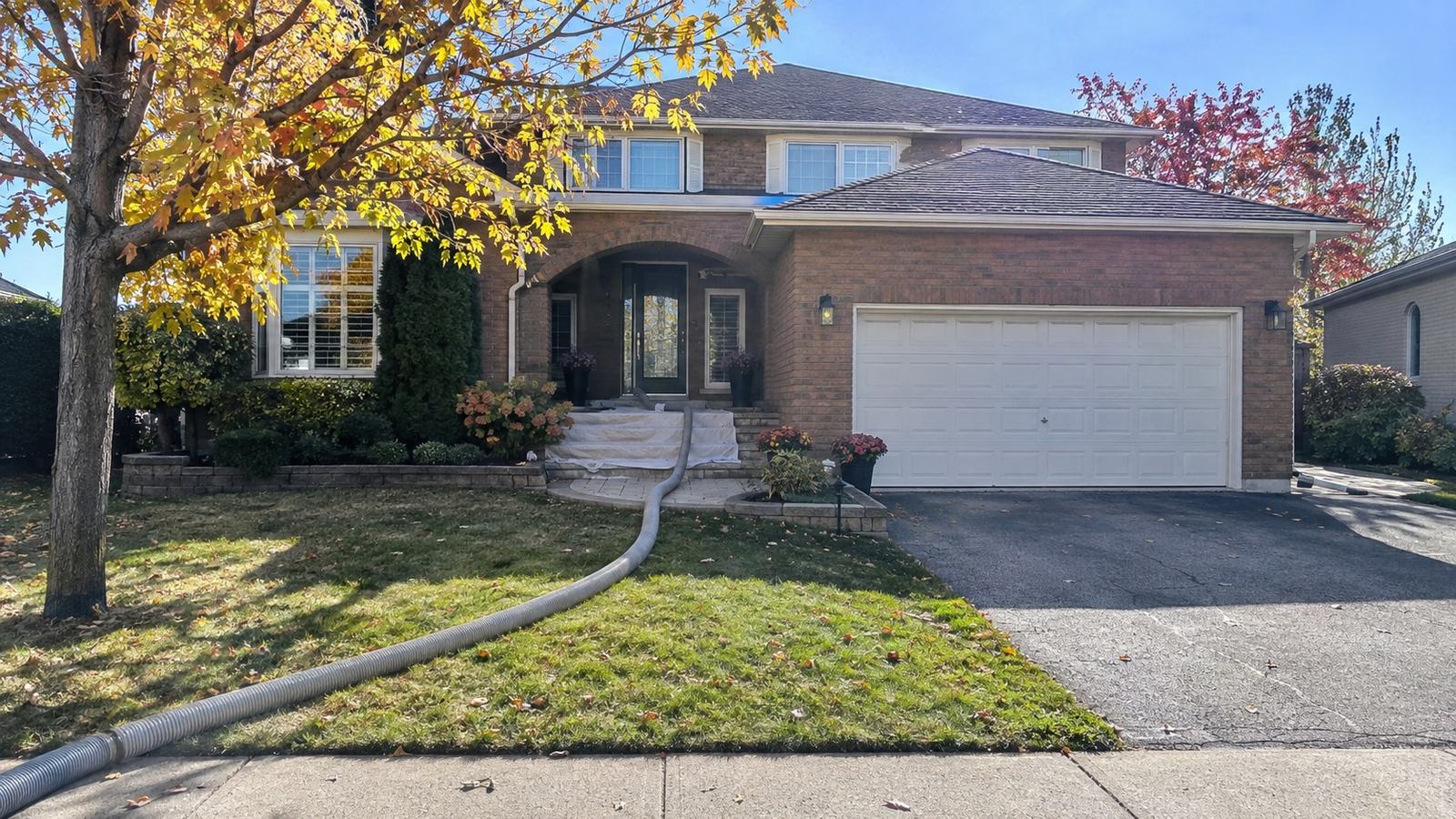
Platinum Insulation Contractors of Mississauga does spray foam insulation in Mississauga, in homes across Erin Mills, Churchill Meadows, Clarkson, Streetsville and Meadowvale. We also top up attics with blown fibreglass, do air sealing, and take out old, wet or rodent-damaged insulation. Nobody quotes until we have measured and compared the options.
The details
How the work comes together
About us
Spray foam insulation contractors in Mississauga
We insulate family homes in Erin Mills, Churchill Meadows, Clarkson, Streetsville and Meadowvale. We work on 1980s and 1990s two-storeys and newer subdivision homes.
We measure before we suggest anything. For each spot in the house we lay out the ways it can be insulated, what each one gives you and what it asks of the house, and then tell you which we would pick. You make the call.
- We measure each spot. Rim joist, garage ceiling, basement wall, attic floor. Each gets a tape measure and a note on what is already in it before anyone mentions material.
- We put the options side by side. Closed-cell, open-cell, batts, foam board or blown fibreglass. For each one you see what it asks of the house: headroom, drywall coming down, mess, and what drives the price.
- We say when a job is not needed. If your house is newer and the rooms are comfortable, we tell you that. A newer home may only need its rim joists done, or the ceiling over the garage.
The job
How a spray foam insulation job goes in Mississauga
From the tape measure in the basement to a swept floor at the end.
Measure and note
We check whichever of the rim joist, garage ceiling, basement walls and attic floor bear on your problem, and note what is already in each.
Compare and quote
The options for each spot are written side by side, with the one we would choose marked. The written quote lists the spot, the material and who does any drywall.
Spray and sweep
Our crew covers the floors, sprays or installs what you chose, trims the foam where it needs it and cleans up overspray and offcuts before we go.
Three spots where foam earns its place
Spray foam is not a whole-house product. In a newer two-storey it earns its cost in three spots, and each one asks something different of the house.
The rim joist and sill plate
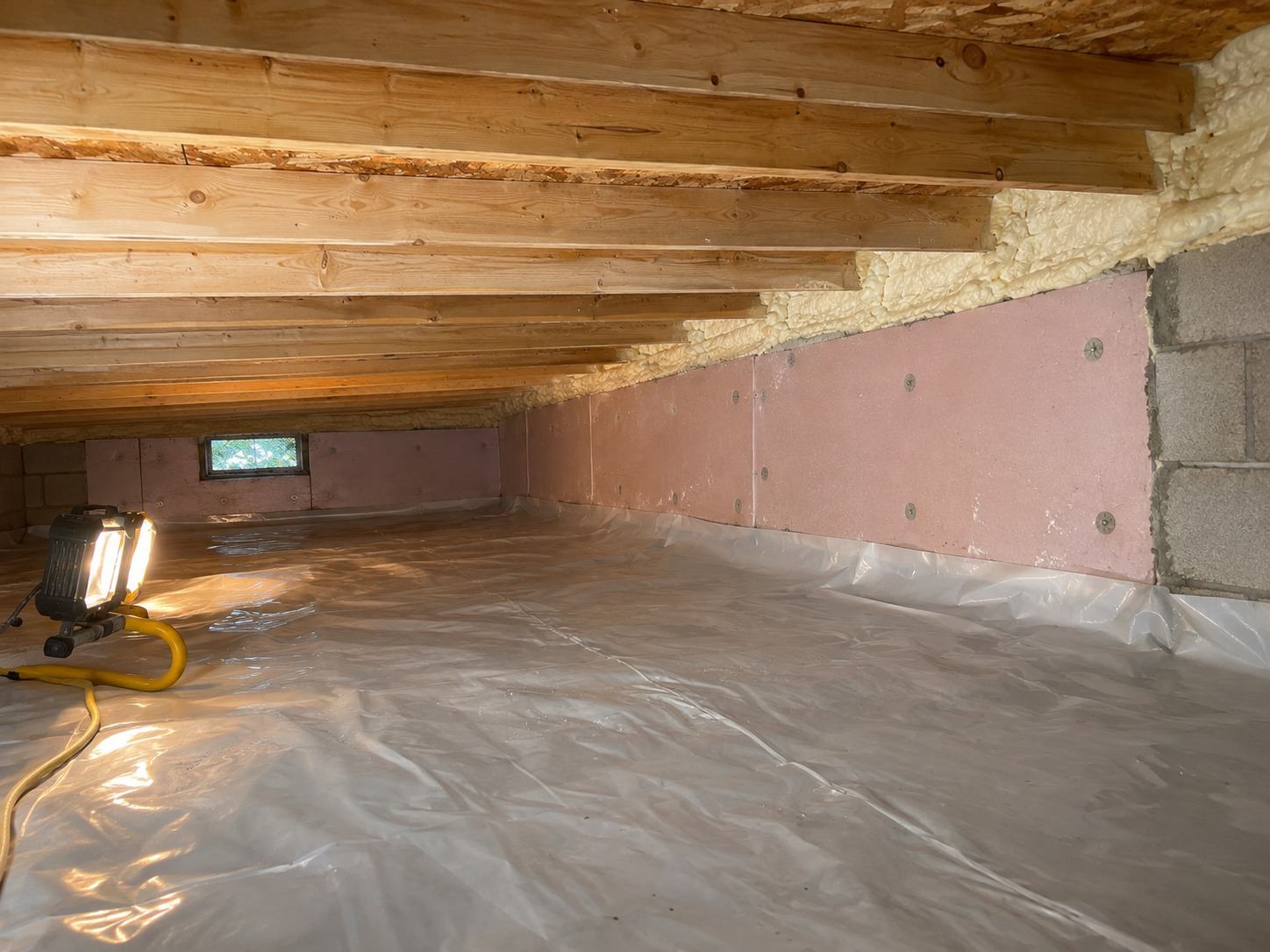
The rim joist is the wooden band where the floor framing sits on the foundation. Outside air can get in at the sill plate, where wood meets concrete, and along the joints in the band. Batts pushed into those joist bays leave gaps at the edges. Foam board works, but it has to be cut around every joist and sealed at each seam. Spray foam follows the shape of each bay and stops the air while it insulates. Our rim joists page goes through the bays one at a time.
The garage ceiling under a bonus room
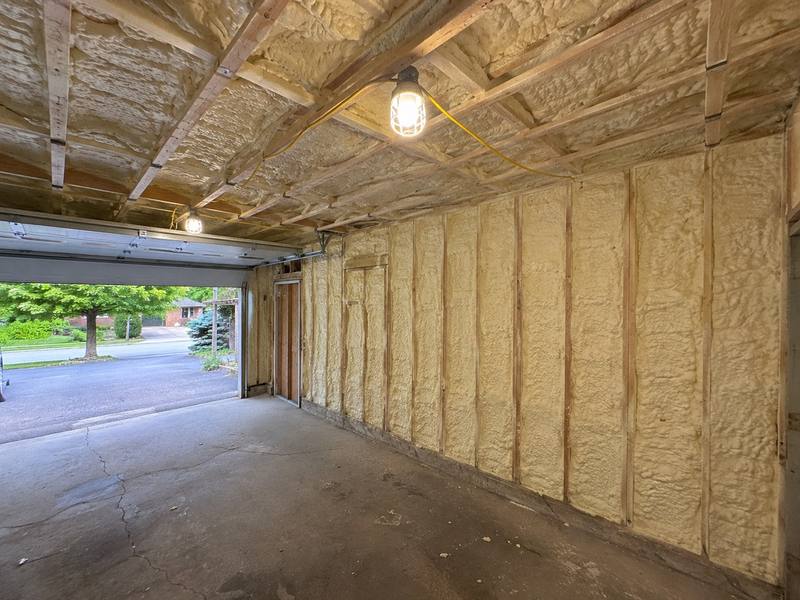
If the floor of a bonus room or bedroom over the garage is cold, look first at the garage ceiling below it. That ceiling is also the fire separation between the garage and the house. If it is finished, it has to be opened before we spray. We insulate the joist bays, and whoever puts the drywall back has to restore the ceiling to fire-separation standard; the quote names who that is. We never drill, pack or blow insulation through a closed garage ceiling. If we see a gap or opening in the separation between the garage and the house, we point it out and leave it alone: closing it is a fire-separation matter for a qualified contractor or the City. Our garage insulation page covers this spot in more detail.
Basement walls before they are finished
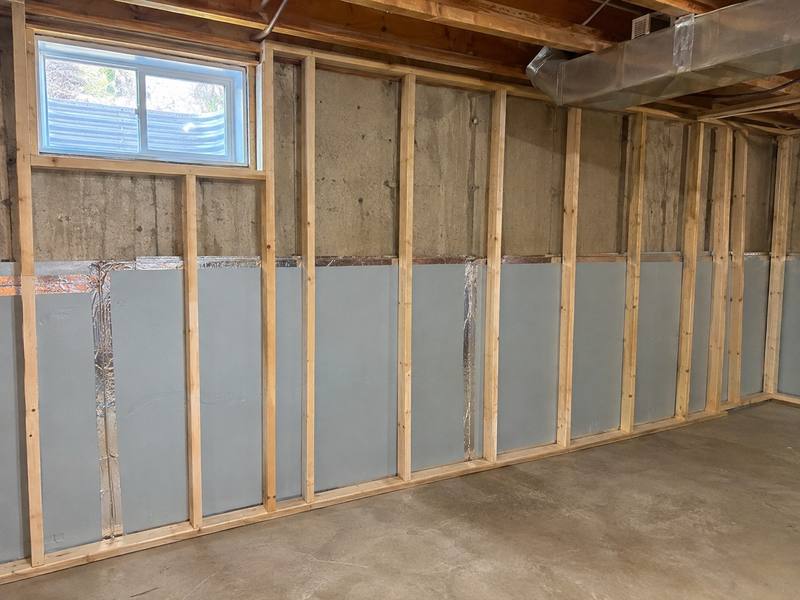
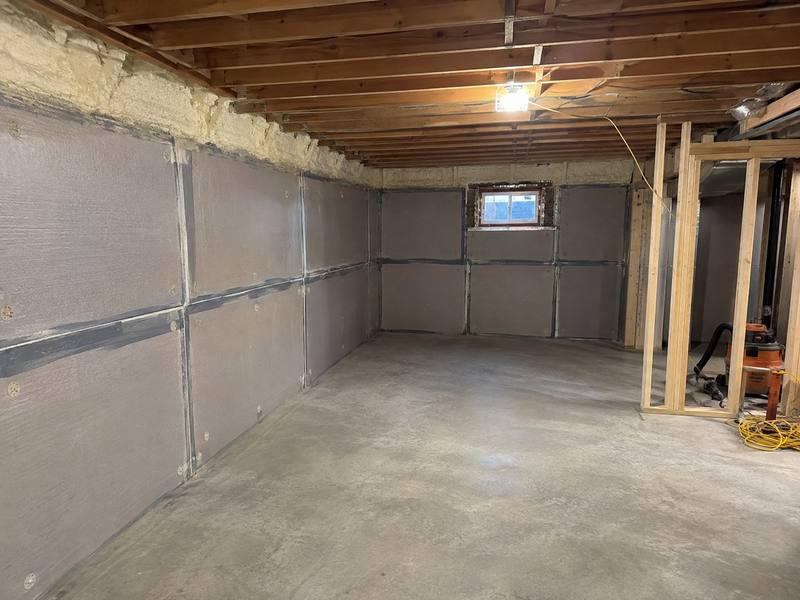
Insulate a basement wall while the concrete is still bare. Foam goes straight onto the concrete, and then whoever is finishing the basement frames and drywalls over it. Once the studs and drywall are up, the wall has to come apart to get foam on it, so the order matters more than the material. Our basement insulation page explains the wall and how it fits into a finishing project.
Closed-cell, open-cell, or no foam at all
Each spot can be insulated more than one way. These are the three options we compare, with what each gives you and what it asks of the house:
- Closed-cell foam: dense and stiff once it cures, and it slows vapour as well as air. It suits concrete and rim joists, where a cold surface meets damp indoor air. It costs more in material per spot, and it needs drywall over it in a finished room or a garage.
- Open-cell foam: softer and lighter, and vapour passes through it. You see it more in walls and roof slopes that stay dry. Against basement concrete, which can hold moisture, it is the wrong pick.
- No foam: batts, foam board or blown fibreglass. Where foam adds cost without adding much, such as an open attic floor, these do the job with less material and less mess. Batts and board need careful fitting and a separate air and vapour layer.
What we would pick for each spot
On the rim joist we would choose closed-cell, because it fills the odd shape and slows vapour at the sill plate in one material. On a garage ceiling under a bonus room, closed-cell against the subfloor and rim, because it keeps garage air from reaching the floor above; batts can make up the depth below it. On a bare basement wall, closed-cell on the concrete, because it keeps the surface warmer and usually goes on without a plastic sheet behind the studs. Open-cell is a poor fit for all three. You decide, and we install what you choose. Our closed-cell spray foam page goes further into the material itself.
From early Erin Mills to Churchill Meadows
Erin Mills was developed as a 'new town' on over 7,000 acres of farmland, starting in the early 1970s. In Churchill Meadows, the bulk of construction began in 1997 and ended in 2001. Across that ground, and in Clarkson, Streetsville and Meadowvale, the houses we work on are 1980s and 1990s two-storeys and newer subdivision homes.
How old a house is changes which spot is worth insulating. A newer house may only need its rim joists done, or the ceiling over its garage. If your rooms are comfortable and the basement is dry, we say so after measuring and leave it there. If one room is cold, we start with the spot under or beside that room.
An older two-storey may have more on the list: a rim joist that was never insulated, an attic floor that has thinned out, or a basement wall finished with batts behind the drywall. We check for those with a tape measure and a flashlight. We don't assume them about any house on your street.
Air, vapour and the cold corners of a basement
Warm indoor air carries moisture. When it reaches a cold surface, like the rim joist in January or a concrete basement wall, that moisture can condense. A damp smell in a basement corner, or dark marks on the wood above the foundation, can start there.
Foam handles this in two ways. It keeps the air off the cold surface, and it keeps that surface warmer, so condensation is less likely. Closed-cell foam also slows vapour, which is why on a rim joist or a basement wall it usually goes on without a separate plastic sheet. Batts against concrete need a vapour retarder on the warm side, and any tear or loose seam in that sheet lets moist air back to the cold wall.
Water coming in is a separate problem. If water is seeping through a basement wall or the floor, a waterproofing contractor fixes that first, and we insulate once the wall is dry. Foam sprayed over a leaking wall hides the leak and does nothing to stop it.
From the first look to the clean-up
Every job runs in the same order:
- We look in the attic, the basement or the crawl space.
- We measure what is already there, spot by spot.
- We set out two or three ways to insulate each spot and say which we would pick.
- You get a written quote.
- Our crew installs what you chose.
- We clean up before we leave.
What the written quote names
The quote names each spot, the option chosen for it and who does any drywall. If someone else has to open a ceiling or cover a wall, that person or company is on the page before any work starts.
Foam has to be covered
Spray foam left bare inside a house usually needs a covering. Interior spray foam needs drywall over it for fire protection, according to Building Science Corporation's digest BSD-114. So foam on a basement wall in a room gets drywall over it. So does foam between the joists of a garage ceiling, where whoever puts the drywall back has to restore the ceiling to fire-separation standard.
We spray the foam. Whoever hangs the drywall, your finishing contractor or someone you hire, is named on the quote. If you plan to leave a rim joist or an unfinished basement open, tell us before the job. Whether that foam can stay bare depends on the product's documents and the building code, and the quote says what they require. Our page on does spray foam need to be covered goes into drywall and code in more detail.
What moves the price of a foam job
Spray foam insulation cost comes down to a handful of things, and the written quote lists each one:
- The area: how much rim joist, ceiling or wall gets foam.
- The thickness: how deep the foam goes in each spot.
- Closed-cell or open-cell: they are different materials at different costs.
- Access: a bare basement wall is easy to get at, while joist bays behind ductwork or a crowded rim joist take more work.
- What comes out first: old batts, wet insulation or debris that has to go before the foam goes on.
- A ceiling that has to be opened: if a finished garage ceiling has to come down, whoever puts the drywall back has to restore it to fire-separation standard, and that work appears on the quote as its own line.
Why a phone call cannot price it
None of those can be judged from a description. After we measure, you see a figure for each spot separately, so you can do one spot now and another later, or only one at all.
Attic top-ups, air sealing and removal
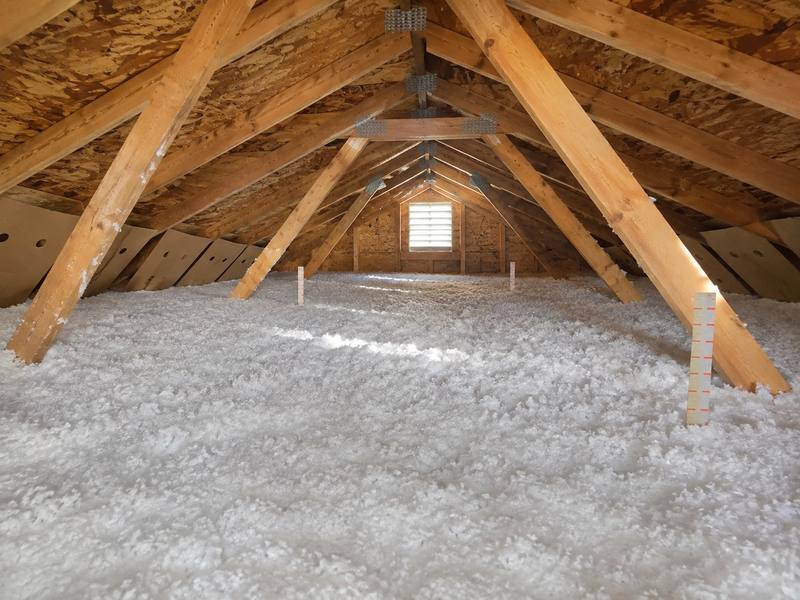
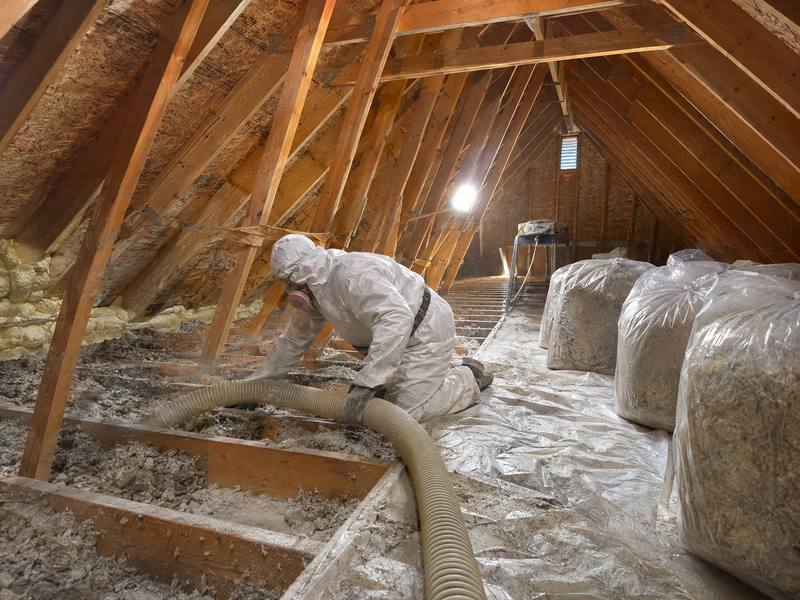
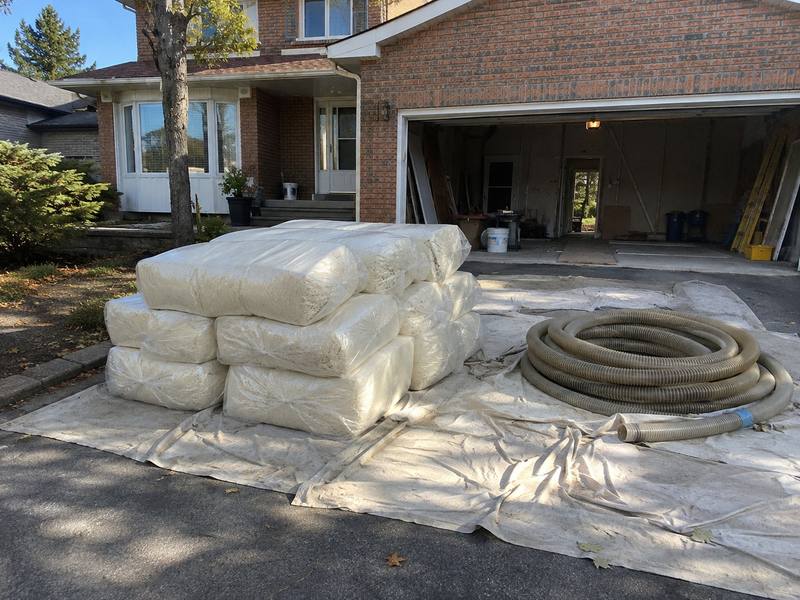
Not every job is foam. An open attic floor usually gets blown fibreglass over what is already there; our attic top-ups page shows how the depth is built up and checked against depth markers. Air sealing at pot lights, plumbing stacks and the attic hatch comes before any top-up, so warm air stops rising through the ceiling into the attic. Old, wet or rodent-damaged insulation comes out before anything new goes in, and our insulation removal page explains how that goes. If animals have been in the attic, a pest-control company deals with them, and with how they got in, before we start; we do not do that part. If we find vermiculite, the tape measure goes back in the pocket. It stays exactly as it is, nobody disturbs it, and we recommend you have a qualified lab or abatement firm test it before any work goes ahead. We do not sample, test or remove it, and we do not arrange the test.
Rebates and foam work
Home Renovation Savings, from Enbridge Gas and Save on Energy with support from the Ontario Government, lists foundation and wall insulation and air sealing among the upgrades in its path that needs a home energy assessment. We do not do, book or arrange that assessment.
Whether foam on your basement walls or rim joists qualifies depends on the programme's current terms, so read them before work starts. Our insulation rebates page explains how the programme fits around an insulation job.
FAQ
Spray foam insulation questions from Mississauga homeowners
Spray foam costs more per spot than batts or blown fibreglass, so we only use it where its air and vapour control matters: rim joists, a garage ceiling under a bonus room and bare basement walls. On an open attic floor, blown fibreglass does the job for less.
It depends on the house, so we only put a figure on a spray foam job in a written quote after measuring. What drives it: the area, the thickness, closed-cell or open-cell, how easy the spot is to reach, what has to come out first, and whether a ceiling has to be opened and drywalled again. The quote shows each of those, spot by spot.
Spray foam stops air and insulates at the same time, and it fills odd shapes like the rim joist and the sill plate, where batts leave gaps. Closed-cell foam also slows vapour and keeps a cold surface such as basement concrete warmer, so moisture is less likely to condense on it. You may notice it as a warmer floor over the garage or less of a draft at the baseboard.
Yes, we insulate houses in Oakville. The job runs the same way as in Mississauga: we measure each spot, lay out the options and give you a written quote.
Yes, closed-cell is what we would pick for a rim joist. It fills the odd shape of each joist bay, stops air at the sill plate and slows vapour, so it usually goes on without a separate plastic sheet. Batts or cut foam board are the alternatives, and the quote can show those next to it.
Not always the whole house, and sometimes not at all. A newer house may only need its rim joists or the garage ceiling under a bonus room done, and if the rooms are comfortable it may need nothing. We tell you which after measuring.
No, not if it is dry and clean; the new blown fibreglass goes on top. Wet, mouldy or rodent-damaged insulation comes out first, so the new layer sits on a clean, dry base.
Yes, an attic insulated at the floor still needs outside air moving through it. During a top-up, baffles at the eaves keep the insulation off the soffit vents. If the attic needs more venting than it has, that is roofing work, and we tell you which trade to call.
Areas
Insulation service areas in Mississauga and Oakville
We cover Mississauga and Oakville. In Mississauga we cover Churchill Meadows, Erin Mills, East Credit, Creditview, Sheridan, Lisgar, Meadowvale Village, Hurontario, Clarkson, Cooksville, Port Credit, Rathwood and Lakeview, and next door we cover Oakville. Each area has its own page below.

Get a quote
Get an insulation quote in Mississauga
Call (437) 563-1419 or send the form, and tell us what you notice in the house: a cold floor over the garage, a draft at the baseboard, a damp smell in the basement. We measure the spots that matter and give you a written quote with the options side by side.