Why Some Homeowners Remove Spray Foam (and When Not To)
Spray foam comes out when a renovation or a hidden leak calls for it, or when it went in badly and pulled away. Foam that is stuck tight and dry is better left where it is.
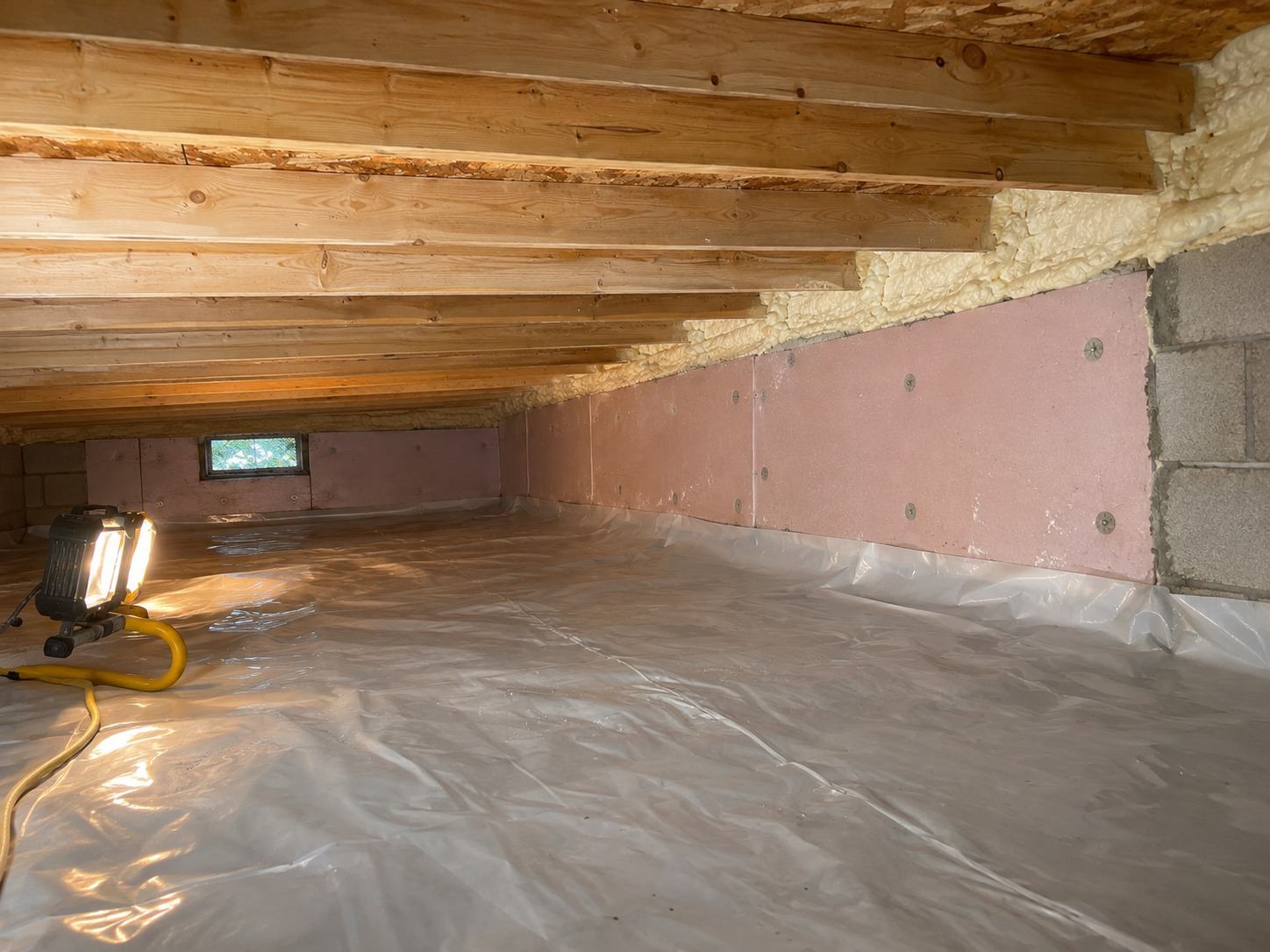
Some homeowners do remove spray foam, for a handful of reasons, such as a renovation that moves a wall or a leak hidden behind the foam. If the foam is doing its job, though, taking it out only makes work. If what you have in your Mississauga house is closed-cell spray foam that is stuck tight and dry, we would leave it alone.
Reasons foam comes out
Spray foam removal should start with a reason you can point to. Treat each item below as something to check on your own house before you decide anything:
- A renovation may move a wall or a plumbing line. Any foam bonded to the old framing has to come off before the new work goes in.
- There may be a leak or water behind the foam that needs finding. Closed-cell foam sticks to the wood or concrete and hides it, so cutting the foam back can be the only way to trace where the water comes from.
- The foam may have been sprayed too thick in one pass, or onto a surface it never bonded to, and pulled away from the joists or the basement wall, leaving a gap behind it.
- A smell that lingers well after the install can lead some homeowners to have that foam taken out.
- Foam may have gone somewhere it should not be, such as over a junction box or around a pot light housing that was not made to be buried in insulation.
- During a sale, a buyer or home inspector may ask what is behind the foam, and the owner may decide to open up a section.
When to leave it where it is
Foam that is stuck tight, dry, covered where it needs to be and has no smell is best left where it is. Taking good foam out means cutting it, scraping it off the wood or concrete and patching the surface, and after all that the spot still needs new insulation. Here the downside of spray foam shows most clearly: it is bonded to the house, so it does not lift out the way a batt does.
A flashlight and a few minutes will tell you most of what you need:
- Press on the foam. If it is stuck tight, it does not flex or lift away from the rim joist, the sill plate or the concrete.
- Look along the edges for any gap between the foam and the wood, and feel for a draft at the baseboard above it.
- Check for water. The foam and the wood beside it should be dry, with no staining, no drips and no damp smell in the basement.
- Check the covering. In a finished room the foam should sit behind drywall, not bare.
- Smell the area. Foam that went in well should not keep a smell of its own.
How our crew takes it out
When foam does have to come out, our crew cuts and scrapes it back to bare wood or concrete, bags it and cleans up before we leave. Closed-cell foam gets cut into sections with a blade, and the rest is scraped off the rim joist, the studs or the basement wall. Open-cell foam is softer and comes away in bigger pieces, though we still scrape the surface clean afterwards.
Before any of that, we inspect the spot, measure what is there and put the job in a written quote. If the foam sits behind a finished wall or ceiling, the drywall has to come off first. The quote names any drywall that comes off and goes back on, and who will do it, because we do not do that part ourselves.
If water was the reason the foam came out, the leak gets fixed first by the right trade: a roofer for a roof leak, a plumber for a pipe, a waterproofing contractor for a basement wall. New insulation over a leak that is still running would just hide it again.
One more stop sign. If we find vermiculite in an attic while measuring, the tape measure goes back in the pocket. Nobody touches the vermiculite, and we recommend having a qualified lab or abatement firm test it before any work goes ahead.
What goes back in
Once the foam is out and the cause has been dealt with, the spot gets insulated again. There are three ways to do it, and which one fits depends on the spot.
New closed-cell foam
Fresh closed-cell foam fills an uneven surface and the gaps around the sill plate, pipes and wires. It needs the space cleared, the sprayer brought in and the surface dry before we start. On a rim joist this is our choice, because the joist bays are small, awkward and full of things to work around.
Foam board
Rigid foam board is cut to fit and sealed at the edges. It suits a flat, dry basement wall, and the day is tidier than a spray job. Every pipe that comes through means more cutting, so on a crowded rim joist it is slow to fit well. On a basement wall about to be finished we would still spray closed-cell; foam board is a close second on a flat, dry wall.
Batts
Fibreglass or mineral wool batts go into the stud bays of a wall framed in front of the concrete. They are the simplest to put in, and the simplest to pull out again in a later renovation. Batts do not stop air on their own, so on a basement wall they come last, behind foam on the concrete.
Choosing between the options
On the quote we put the options for each spot side by side, say which one we would choose and why, and leave the decision with you. In a Mississauga two-storey from the 1980s or 1990s, or a newer subdivision home, the answer may well be to leave the foam alone and do nothing.
If what is coming out is not foam, say old batts in a basement or blown fibreglass on an attic floor, that is insulation removal, which works differently from cutting and scraping foam.
Related questions
People remove spray foam insulation when a renovation moves walls or plumbing, when water behind it has to be found, or when the foam went in badly and pulled away. A smell that lingers after an install, or a question from a buyer or home inspector, can also lead to it. Foam that is stuck tight and dry is best left alone.
The main cons of spray foam insulation are that it is hard to take out and it hides what is behind it. Closed-cell foam bonds to the wood or concrete, so removing it means cutting and scraping, and a leak behind it can be hard to trace. It also has to be installed properly: foam sprayed too thick in one pass can pull away, and in a lived-in room it needs to sit behind drywall.
That is a question for your lender, since each lender sets its own rules and we do not know them. What we can tell you is where the foam is in your house and whether it is stuck tight, dry and covered where it needs to be.
Services
How we can help in Mississauga
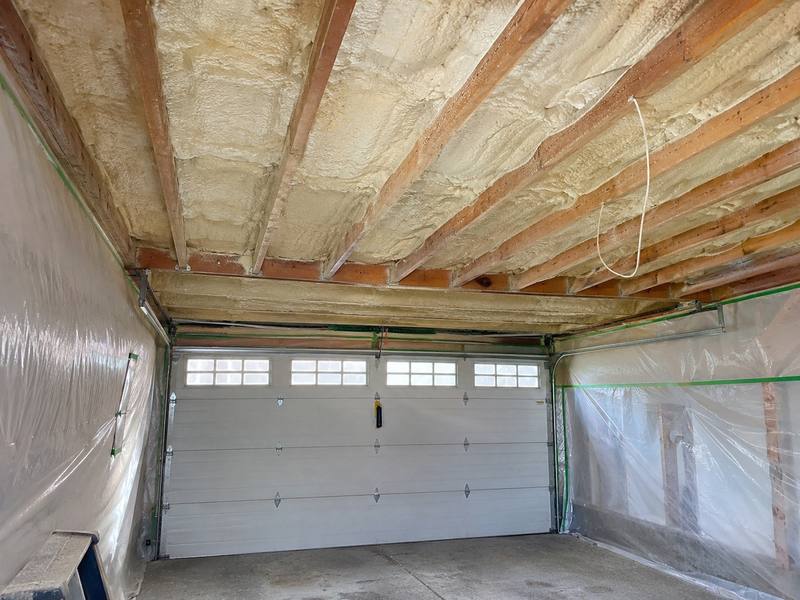
Closed-Cell Spray Foam
Dense foam for concrete walls, rim joists and garage ceilings, set beside open-cell and no foam so you can compare.
Learn more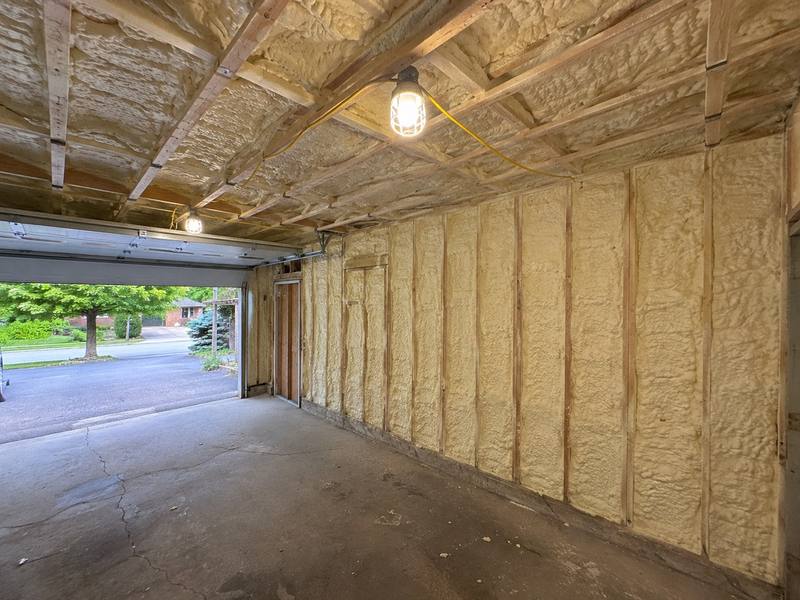
Garage Insulation
The ceiling under a bonus room or bedroom, opened and insulated, and the walls if you heat the garage.
Learn more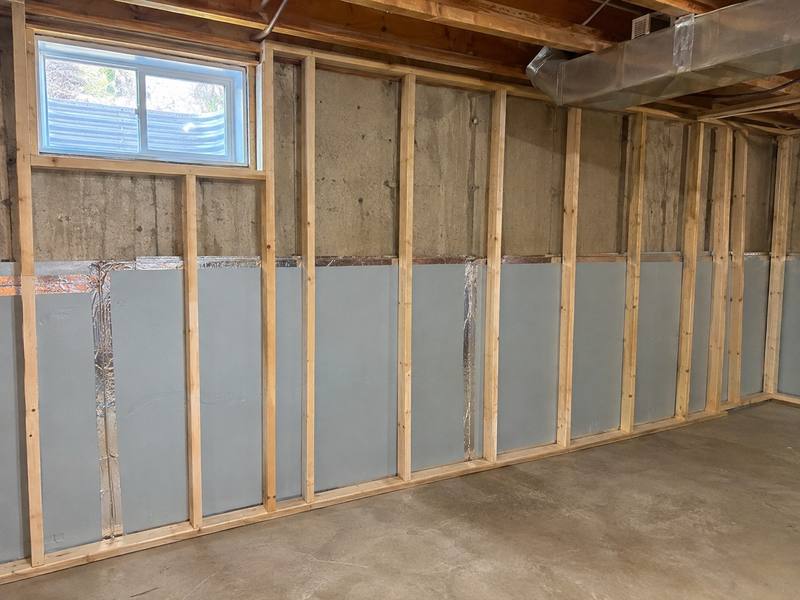
Basement Insulation
Foam, board or batts on bare concrete before the basement is framed and finished.
Learn more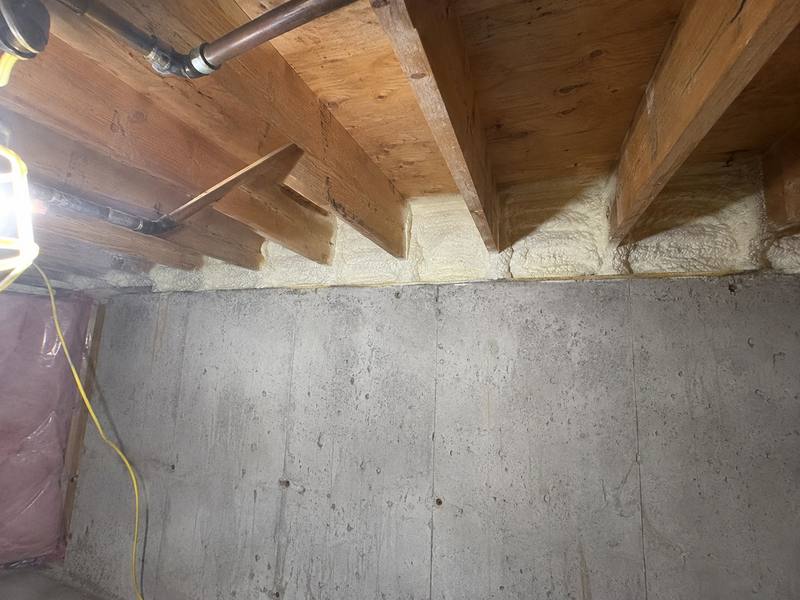
Rim Joist Insulation
The band of framing above the foundation, foamed bay by bay so air stops at the sill plate.
Learn more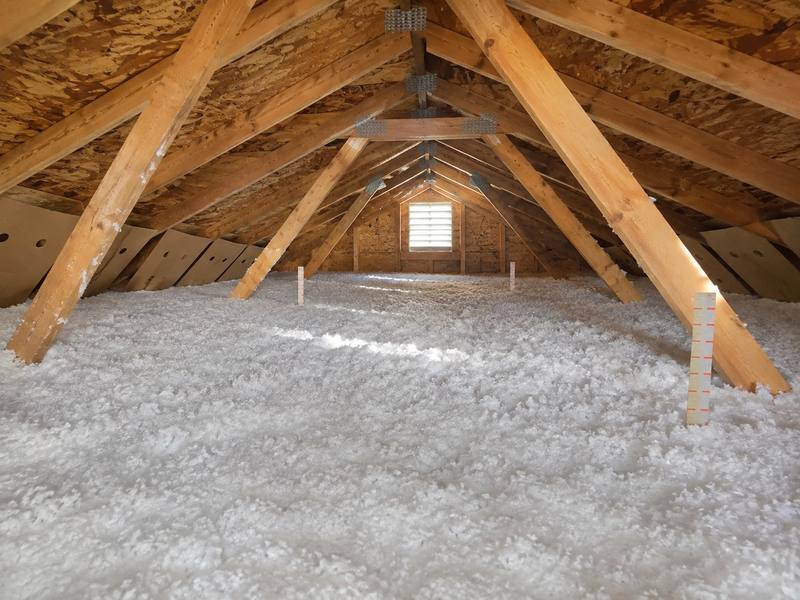
Attic Top-Ups
Blown fibreglass added over what is already in the attic, measured from the hatch first.
Learn more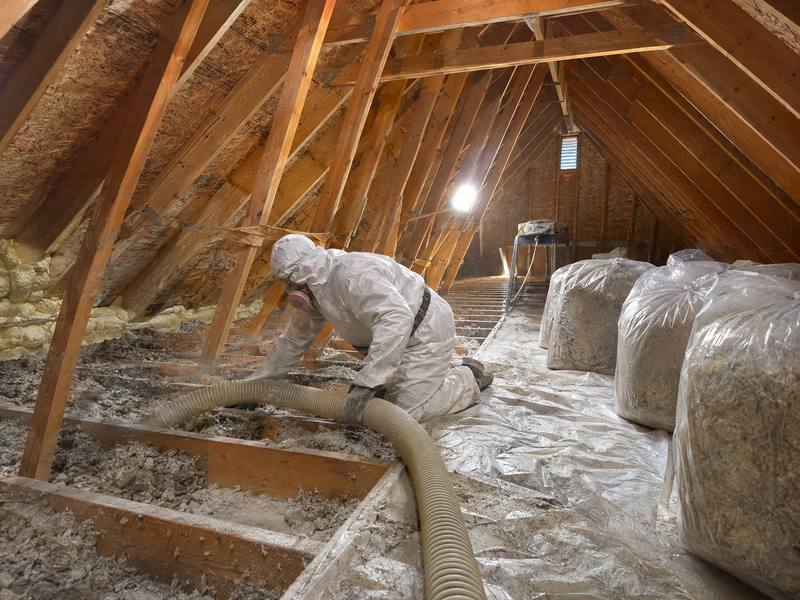
Insulation Removal
Old, wet or rodent-damaged insulation bagged and taken out, and spray foam cut back when it has to go.
Learn more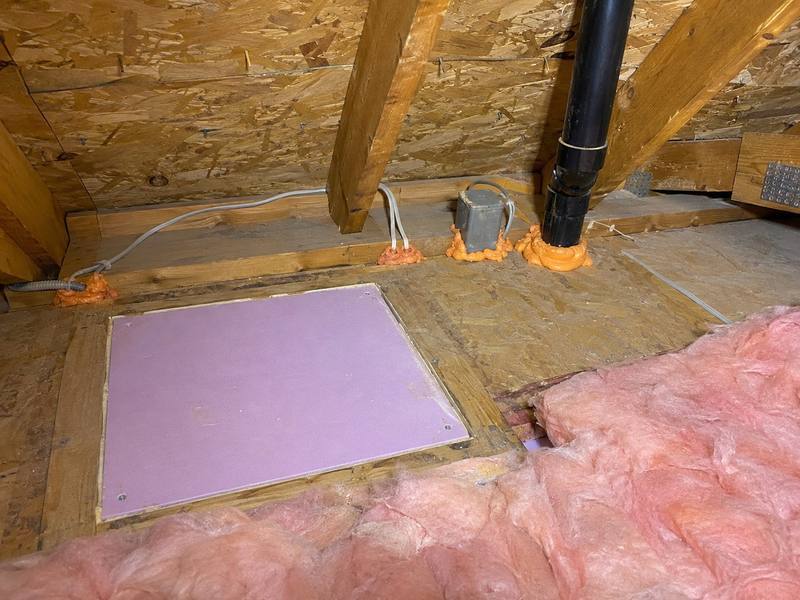
Air Sealing
Pot lights, plumbing stacks and the attic hatch sealed from the attic side before any top-up.
Learn more
Insulation Rebates
The two Home Renovation Savings paths explained, and where foam and basement work fit.
Learn more
Get a quote
Get an insulation quote in Mississauga
Call (437) 563-1419 or send the form, and tell us what you notice in the house: a cold floor over the garage, a draft at the baseboard, a damp smell in the basement. We measure the spots that matter and give you a written quote with the options side by side.